..or “Cow Contractors” ( which is just a more decent sounding translation of the blog title). As some would know, since I quit my job in January, 2020, I was running around all over the place exploring ideas and opportunities for my next project. My brother Mayank, my husband Masoom and I used to have frequent brainstorming sessions about market demands, supply gaps, existing or latent opportunities and so on and so forth. Confession- my contribution in such discussions was a meager 15-20 mins of participation, during which, in my honest opinion, the most important thoughts and ideas are generally laid out on the table and concerns/questions are addressed. Anything after that is, well, just casual conversation. People may disagree.
One of the sectors I have been very interested in is the dairy sector, be it supply of A2 milk or value added products like smoothies or cheeses. Over the last few years, I have been reaching out to people at the grass root level to understand the dynamics of this sector. My focus has always been on desi cow breeds, primarily Gir and Kankrej, which belong to Gujarat and Rajasthan. Since we had no prior experience in the dairy industry, we decided to figure out the grass root economics of the industry and understand behavioral tendencies of native cow breeds along with their impact on unit economics.
Our first visit was to a small village called Gondal in Gujarat in February 2019. Masoom and I spent our 3rd anniversary visiting a humble and serene dairy farm housing approximately 100 odd Gir cows. We spent 3 nights among the silent and calm bovines. I have to say this- there is something enlightening about living amidst cows. These creatures are gentle and loving, and they want to be loved, petted and cared for. They lick your hands and faces, much like dogs. The sight of a cow nursing her calf is one of pure joy and blissfulness. They say that our Indian humped cows are extremely sensitive creatures. If a native cow stops feeling the presence of her tiny calf, she stops milking, unlike the foreign/mixed breeds that were imported to India around the time of the white revolution. For this reason, it is extremely important that calves of native Indian breeds are fed on their mothers’ milk, before the remaining milk can be taken for human consumption. Imported breeds, however, continue to lactate generously without, in some cases, having seen their newborns even once. The cruelty of it all! This is why milk of native Indian breeds is available in the markets at a significant premium.
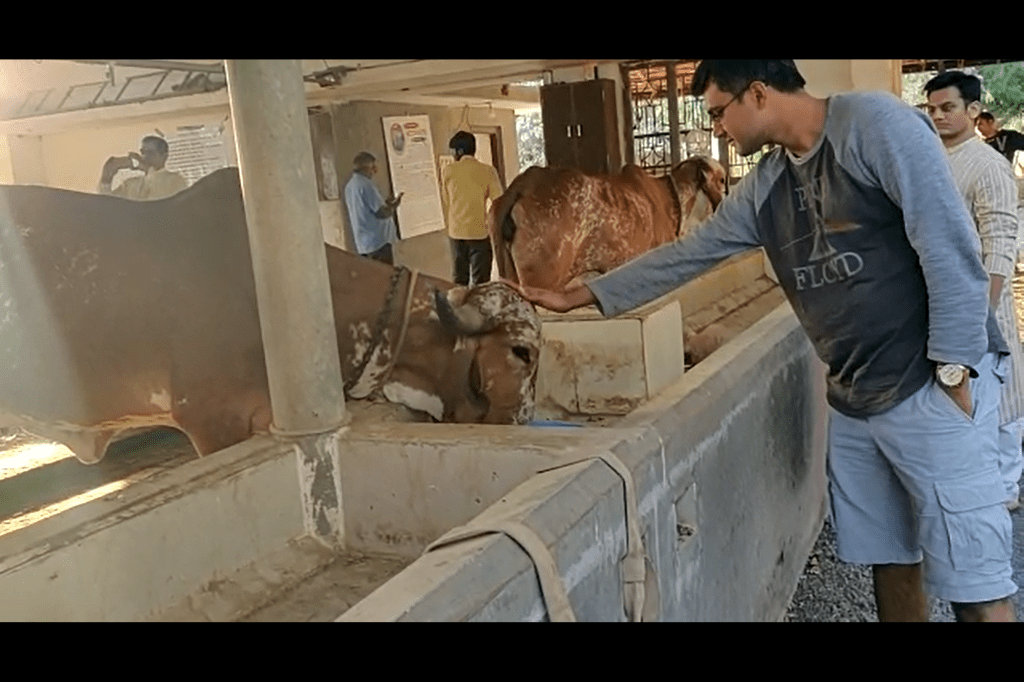
What we were taken aback by, however, was the attitude of the man in charge. While the dairy farm and its primary inhabitants were oh so humble, this man seemed to be afflicted by some kind of a superiority complex because of his close association with cows. Always dressed in a white dhoti-kurta, he came across as a know-it-all, self-righteous man and often passed snide comments on city dwellers and how, in his view, they did not deserve the salaries they were paid! I personally got a whiff of brahmin-supremacy and misogyny from him. This man was pretty screwed up, but we assumed his case was one off.
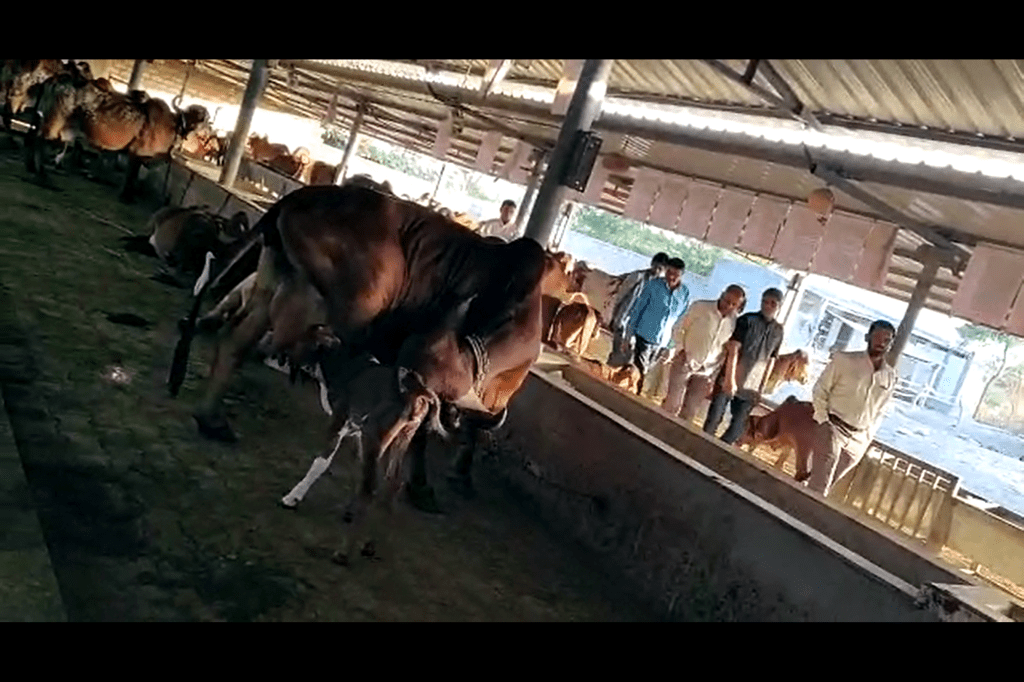
Anyhow, a deep dive into the dairy industry also got us thinking about the uses of cow dung, which is a thoroughly underutilized raw material for generating sustainable energy. In February of 2020, Mayank floated the idea of exploring setting up a bio-gas supported supply chain fleet. The first step in this was to explore setting up a bio-gas plant of significant scale, which would of course require heaps and heaps of the primary input- cow dung! After some research, I identified Rajasthan as the state which would be most suitable for a project of this kind, since Rajasthan was the first Indian state to set up a Ministry for Cows and has enacted several welfare measures for cow shelters.
I immediately started dialing numbers and got in touch with the two largest goshalas of the world- Shri Godham Mahatirath Pathmeda in the Sirohi District of Rajasthan, and Bhadariya Goshala near Jaisalmer. Both these goshalas function under their respective trusts. I planned a 4 day road trip with Mayank and my uncle, Amit chacha. The road trip started at Udaipur and ended at Jaipur. Oh what a trip it turned out to be! Amit chacha on the wheels, and some amazing conversations. I did develop a terrible kink in my neck right at the beginning of the road trip, due to which I was only able to see the left side of the beautiful landscapes that the interiors of Rajasthan have to offer (my neck refused to let me look straight or right and the pain lasted almost till day 3, but that did not hamper my excitement).
The Biogas power plant project we were contemplating would ideally have had a 1 MW power capacity which required approximately 200-250 tonnes of cow dung per day. So we were looking at sourcing cow dung from around 20,000 to 25,000 cows per day! It was an ambitious project, for which reason we were in conversation with two of the biggest goshalas in the world that house thousands of cows and have loads and loads of the precious raw material to spare! And well, our objective was quite noble. We had had assured our prospective partner goshalas that we would not draw any personal profits from the proposed Biogas plant and all proceeds from the same would be reinvested into the development of the land, the local agricultural communities and welfare of cows. Our intention was more of an experiment for setting up a self-sustained micro-economy, the starting point of which was to be the humble cow-our gaumata.
While we did not expect the conversations with the goshala trustees to be easy, this is the gist of what we learnt:
In the past, every village (or cluster) was given some land (around 5-50 hecatres) for grazing of cattle. This land is called gauchar (land for cattle grazing). Today, these lands enjoy the protection of law and no construction or use for commercial purpose is permitted. For squeezing the most out of this policy and the state welfare schemes for cows, people in Rajasthan often adopt a few stray cattle off the road, claim free land around as gochar and start claiming 50 percent (this is what we were told) of the expenditure incurred for rearing the cattle. These numbers are obviously inflated.
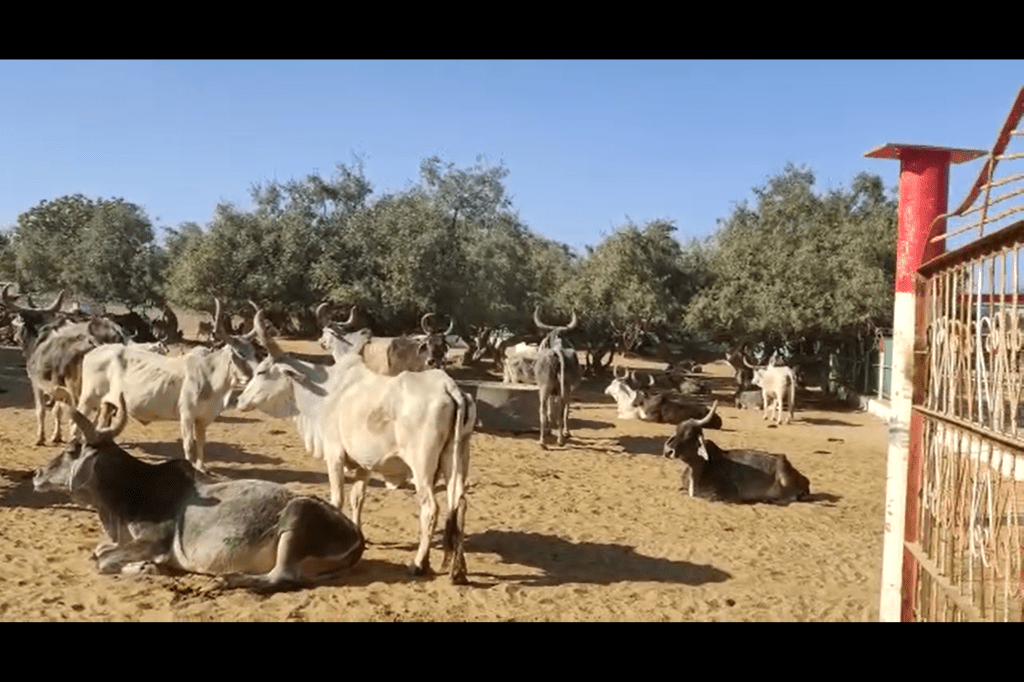
What was surprising is that the 2 goshalas that we visited had a whopping 400 acres of land each under their control. These trusts invariably have one Maharaj who is the spiritual guide of the area, and usually a temple. The head trustee is generally an oldish man who exercises significant authority and respect in the locality. It is these trustees- again in dhotis and kurtas, who dictate the culture and mores of the local society. In fact, this particular head trustee at Bhadariya (again in white dhoti and kurta), whose welcome was a little coldish, was an extremely orthodox man who passed a quick comment on my missing sindoor and magalsutra. While it was offending really, I did not care much to give him a dose of my perception of an ideal Indian married woman. I was after all, in one of the remotest parts of the country and expected to see a glimpse of such ideologies. Besides, I had different ideas of how to utilize the couple of hours we had in hand.
Basically these trusts are sitting on humongous acreage of free, vacant land, getting donations in crores along with 50% contribution from the state towards maintenance of cows. So these people are rich, rich rich, and at what cost? That of our humble cow, who is grazing silently in the background. The attitude was as if the trust and the trustees were doing a favour to our dear cows by letting them live and graze on the land, which technically, was theirs by practice and law. If only they could speak.
My second observation was that these orthodox trustees were completely averse to the idea of any economic partnership and development, even though beneficial for them and the cows. They almost seemed to loathe the idea. A study of the ancient Indian economy will show that the cow has been ascribed two aspects -the first as a creature of immense spirituality, which is why we call them gaumata, and second, as a very important economic asset which formed the basis of the Indian economy. In return, when the economy thrived, cows were better taken care of, respected and appreciated. These pigeon-minded people however, who make themselves out to be the “protectors of cows” are doing nothing but riding on the back of these animals for living out their petty lives.
I am not suggesting that the cows were mis-treated or neglected, but the potential of a cow as a precious economic resource is completely overlooked. The greatness of gaumata lies in the fact that even its refuse is precious! Cows, old or young, fertile or infertile, are not a liability. They are an asset. If only people who have assumed the responsibility for cows understood this simple fact. All the cow dung which we proposed to buy from the trust, otherwise goes to waste or a minuscule portion of it is sold as fertilizer for peanuts.
The reticence and scepticism of our respected trustees betrayed their insecurity over setting up a venture not entirely under their control. It would threaten their authority and control over resources which otherwise were going to waste. These people were used to living on donations and state money, some part of which they dedicated towards the welfare of the cows, in order to tick the boxes of course. Such are the “gaay ke thekedar” that we encountered on our trip. Vast resources of land and finances, proposed partnership for economic advancement, and all they wanted was to sit on their seat and have people come 15 times a day to pay their respects.
Having said that, I cannot take away the positives. The food that we were served during our visit was simple, nutritious and soul warming- the best of the Rajasthani thalis that I have ever had. Taking a walk amidst our gomatas was, as usual, blissful. But the cherry on the cake was the lovely drive through the changing landscapes of Rajasthan- the semi barren Aravalis and the deserts around Jaisalmer. I spotted wild boars, nilgays and black bucks on the road. Drove through huge wind mill farms and enjoyed the hospitality that our lovely desert state has to offer. As far as the cow is concerned, I just hope that this country sees a time where their true value is once again understood and appreciated, and this gentle creature is once again given the respect that it truly deserves.

 Gazing through my Window...
https://therealisticstudentvirtualportal.wordpress.com/2020/07/27/cow-culture-carcass/
LikeLike