After having made a somewhat decent Mozzarella, I thought I would try my hand at another fresh cheese before I come back to Mozzarella. I wanted to do Feta because it’s a fairly known cheese in India- the others being Cheddar, Gouda, Parmesan, all of which are ripened cheeses.
As per the recipe I follow I ordered myself 4 liters of raw cow milk from Provilac. But it turned out that that day, we ran out of regular milk. So when Masoom and I felt like having a mug of hot chocolate, we boiled and used a bottle of that milk. The rennet and culture packs that I am currently using are made for standard batches of 4 liters milk, or 2 liters milk depending on which cheese you are making. Feta required 4 liters. Halloumi however, required 2 liters. So I decided to make Halloumi instead if Feta.
In my last post, I mentioned that I had completed a cheese tasting course with Namrata from Kase Chennai. For that course, Namrata had sent the participants boxes of utterly delicious cheeses ranging from fresh, soft cheeses to hard and strong flavoured cheeses. One of them was Halloumi cheese. Halloumi is a semi hard, unripened cheese which originated in Cyprus. It has a high melting point and therefore, it does not melt easily. For this reason, it is typically had grilled or pan fried.
Even though I had always been curious about Halloumi, I had never had the opportunity of tasting it before the one that Namrata sent in her cheese box. To pan fry Halloumi, you need, well, a pan. That’s it. Nothing else. Cut thin slices of Halloumi cheese and fry for a few minutes on both sides till a lovely reddish char appears, and you’re good to go! Namrata’s Halloumi tasted like a slice of heaven. Mine, not so much, though it wasn’t all bad!
Here’s my first attempt at Halloumi-
From what I understand, Halloumi (and perhaps most cheeses) require the heating temperature of milk to rise slowly and gradually, which is why I used a double boiler. The recipe I followed prescribed a water bath. The difference between the two is that while in a water bath, the milk container is set directly in a container with simmering water, in a double boiler, the milk container is suspended above the pot with boiling water.

This particular type of cheese does not require Citric acid or starter culture, which means there is no acidification of milk. Instead we jump directly to coagulation by using rennet. The quantity of rennet used however, is double of what’s used in Mozzarella. I am yet to understand the chemistry and biology behind this deviation.
I started with heating the milk to 45 deg celsius on the double boiler, post which the rennet was added. Thereafter, I let the curds sit for 45 mins. The biggest challenge I faced in this was maintaining the temperature at 45 deg celsius for the entire duration of 45 minutes and after that. I read online that in a double boiler/water bath, the temperature falls only by a degree or two over a span of one hour, so I could just leave the double boiler setup as it is and the temperature would be maintained. That’s what I did. Keeping a check on the temperature was slightly tricky since the container was covered. and having to dip the thermometer again and again would disturb the setting curds. I think I managed to keep it at about 43 deg.
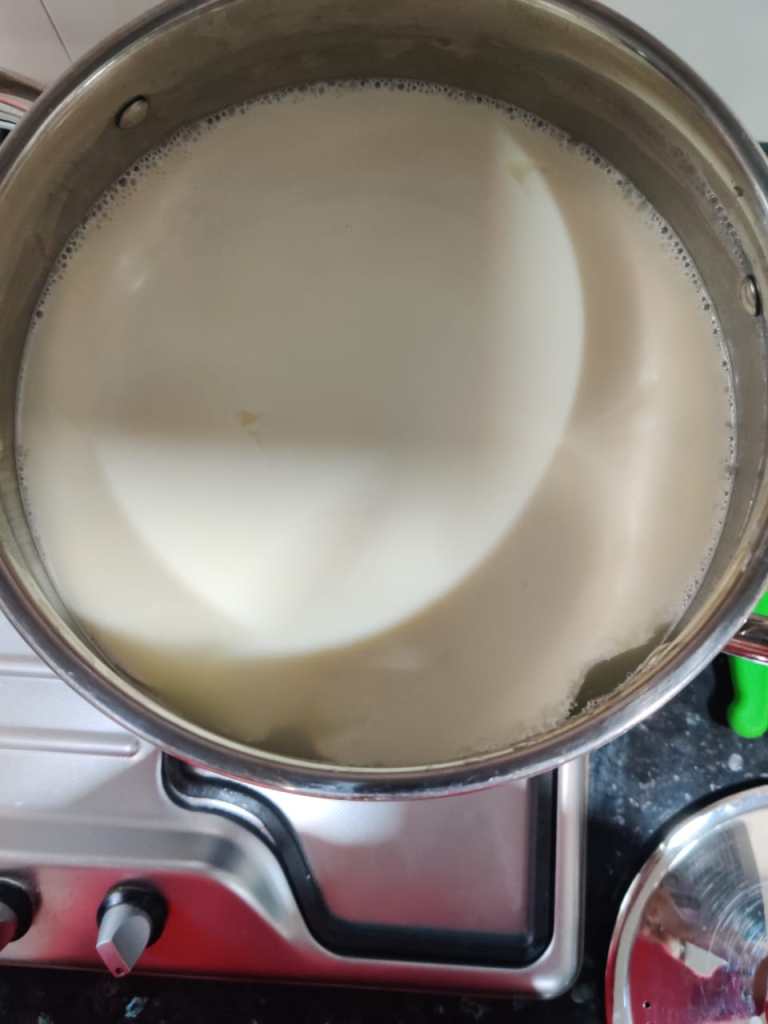
After 45 mins, the curds had set and looked pretty good.
I cut the curds into one inch cubes and let them rest for another 5 mins. Once again, maintaining the temperature at 45 deg celcius, I stirred the curds for about 10 mins. According to the recipe, they should have become smaller and slightly springy. I did not notice any such change. According to me, they were springy to begin with. The curds did end up crumbling into peanut size pieces.

The curds were then spooned out into a cheesecloth lined colander. I placed a small vessel of water (approx 3 kg) on top of the cheese to let the whey drain out for about 30 mins.
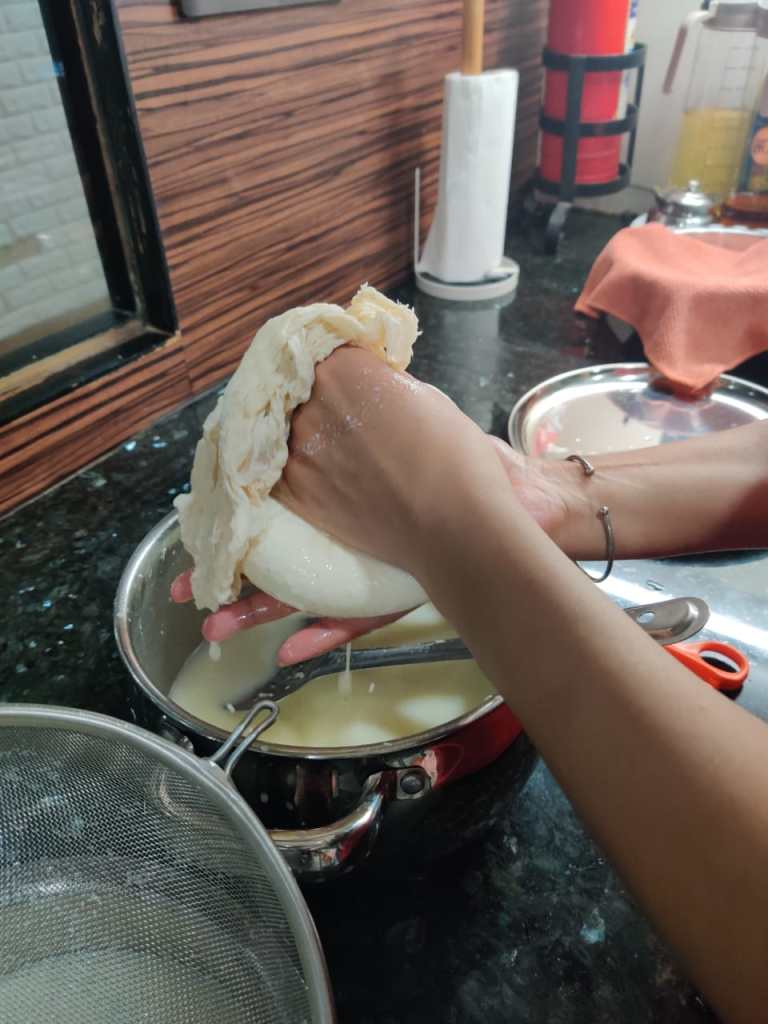
After 30 mins, the cheese was cut into small blocks and put in heated whey (90 deg celsius).
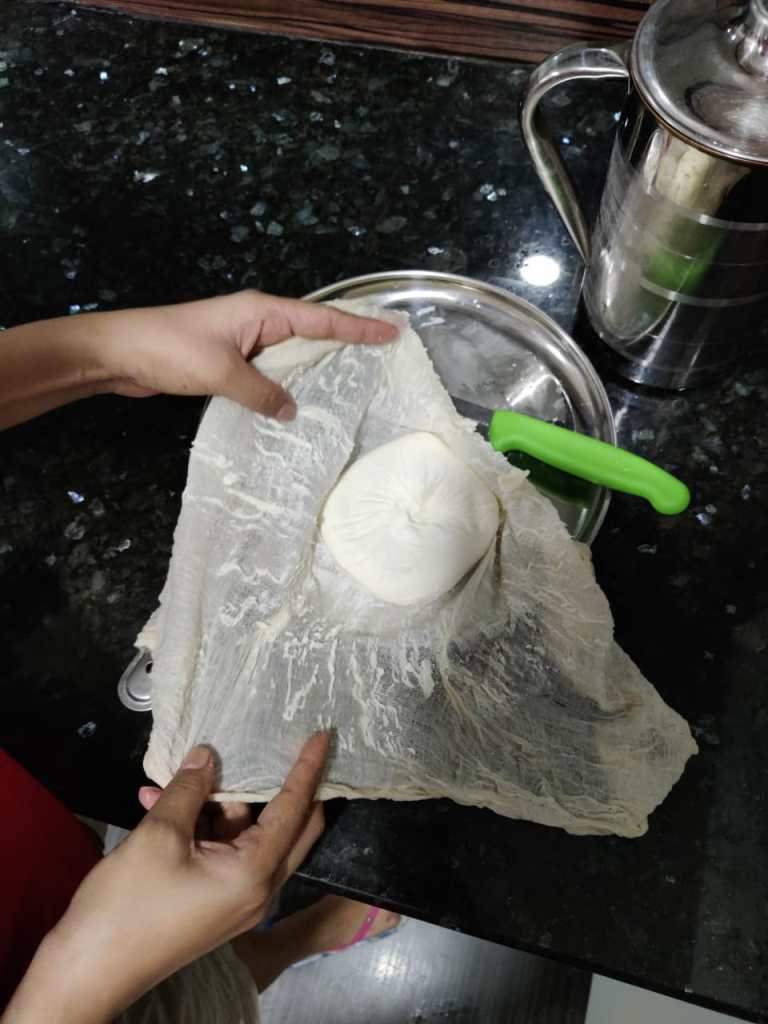
The curds sank to the bottom. According to the recipe, these curds should have floated to the top after 5-10 mins. Mine floated up only after 45 mins or so and a bit of it even crumbled off. I clearly did something wrong.
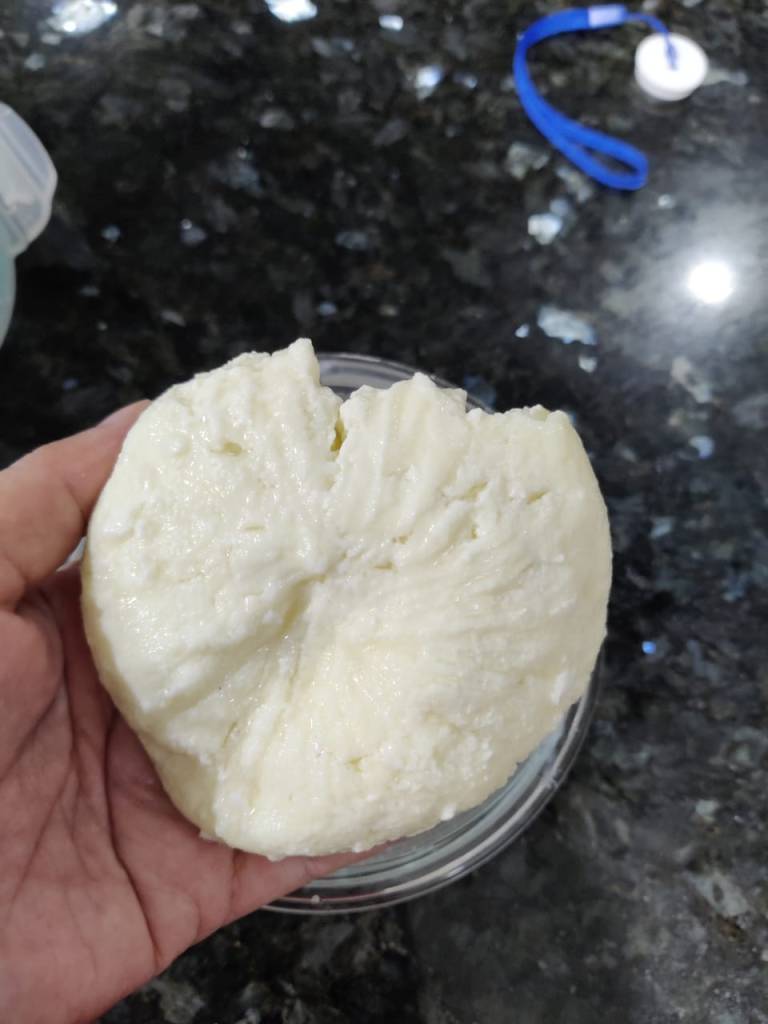
After this step, I dried the Halloumi and placed it in 20% brine, which made it extremely salty!
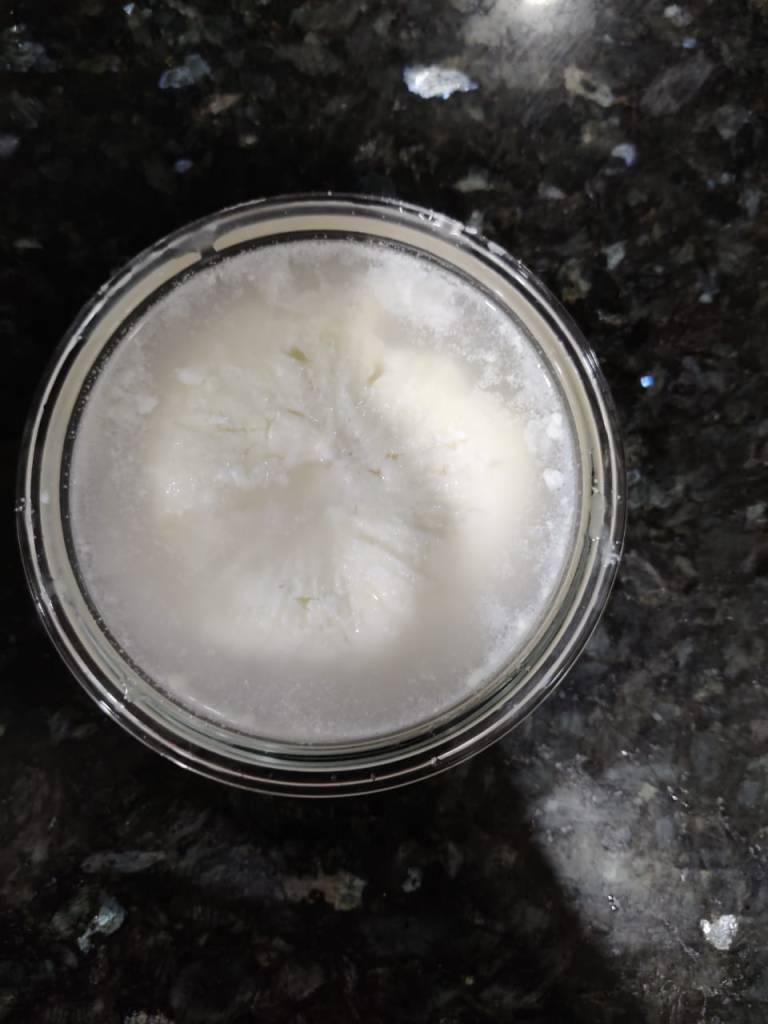
I pan fried some.
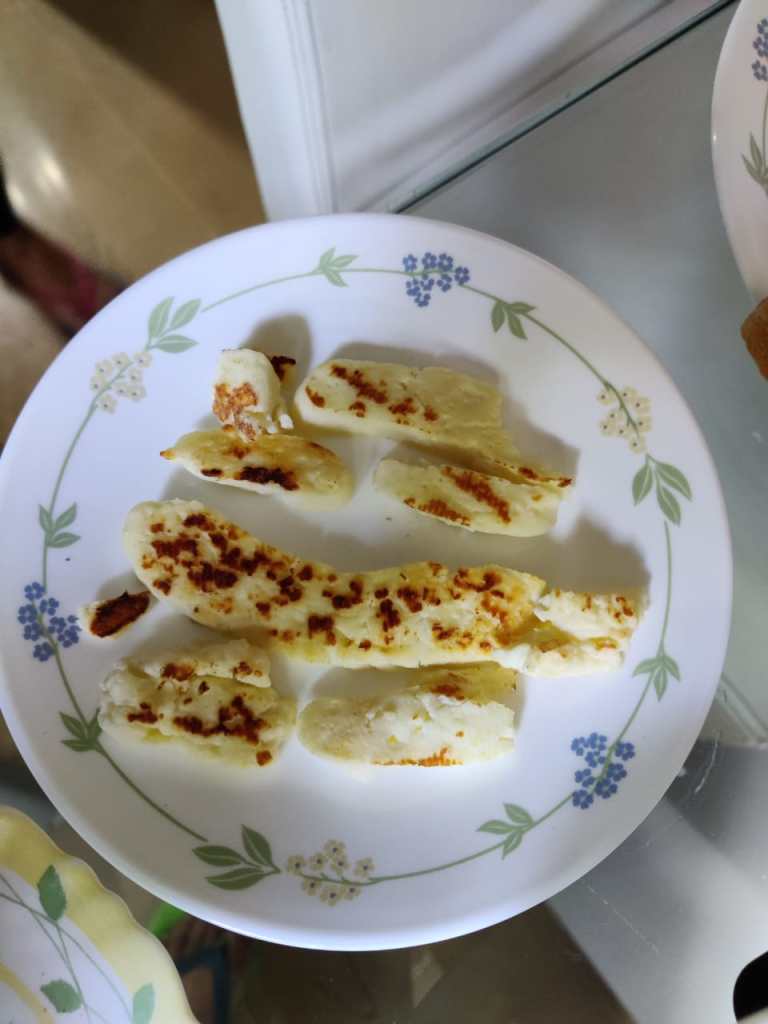
While it was Halloumi, it was nowhere as close to Namrata’s. That chewy buttery taste of a good Halloumi was absent. It tasted like pan fried paneer., which I don’t dislike, obviously. But it wasn’t close to what it should have been. I’ll come back here when I manage to make a decent Halloumi.

 Gazing through my Window...